“AI‑first” is quickly becoming the defining strategy for modern companies seeking better customer experience (CX). We explore what it means to be an AI‑first business, how it transforms front‑end experiences, and practical steps to implement it.
Being an AI‑First Business: Redefining Front‑End Customer Experience for a New Era
In the last few years, “AI‑first” has gone from a Silicon Valley buzzword to a strategic philosophy shaping industries from retail and finance to government and education. But what exactly does it mean to be “AI‑first”? And why is it becoming essential for companies who want to deliver superior front‑end customer experiences in 2026 and beyond?
At its core, being AI‑first is about rethinking how your business creates value – starting with intelligent automation, data‑driven insights, and machine learning at the center of your products, not as an afterthought. It’s about designing customer interactions where AI enhances every touchpoint – making the experience faster, more personal, more intuitive, and less frustrating.
In short: to be AI‑first is to make intelligence the engine of your customer experience, not a feature bolted on top.
The Shift From Digital‑First to AI‑First
For more than a decade, businesses have been on a journey toward digital transformation. The “digital‑first” mindset – anchored around internet connectivity (fiber, etc), phone systems (UCaaS, CCaaS), mobile apps, websites, and e‑commerce channels – fundamentally changed how customers engage with brands. Yet for all the progress, digital tools alone have limits. They make transactions easier, but they don’t always make experiences better.
Today, customers expect more than convenience. They expect context, anticipation, and personalization. They assume the brands they interact with understand who they are, what they’ve purchased before, and what they might want next. They want to ask questions in natural language, not search through drop‑down menus.
This is where the digital‑first model breaks down – and where the AI‑first model begins to shine.
An AI‑first business doesn’t just digitize workflows; it teaches systems to understand, predict, and adapt. It invests in data intelligence layer that continuously learns from customers, adjusting in real time to create experiences that feel effortless. It’s the difference between a website that simply processes your order and a concierge like system that understands your intent before you even articulate it.
Why AI‑First Matters for Front‑End CX
Front‑end customer experience – the portion of the customer journey where users interact directly with your brand – has always been the battleground for loyalty. It’s where first impressions form and trust is either built or lost. As competition grows and buyer attention shrinks, every millisecond counts.
AI enables organizations to improve the front‑end experience along three critical dimensions:
- Personalization at scale. Traditional marketing segmentation works in broad strokes. AI enables individualized engagement – where every user journey is unique, shaped by behavioral and contextual data. Netflix recommendations, Amazon product suggestions, or Spotify’s playlists are all manifestations of this approach.
- Proactive and predictive service. Instead of waiting for a customer to experience a problem, AI systems can anticipate issues before they occur. For example, an airline’s AI might alert a traveler of a gate change before the airport screens update, or a bank’s AI could flag potential overdraft risks and suggest preventive steps.
- Frictionless interfaces. Natural language processing (NLP), voice recognition, and computer vision reduce the need for rigid interfaces. Conversational chatbots, smart kiosks, and voice‑enabled apps remove complexity, creating seamless, human‑like front‑end interactions.
Building an AI‑First Foundation
Becoming an AI‑first organization doesn’t happen by installing a chatbot, adding AI powered human augmentation to your UCaaS or CCaaS, or rolling out automation in customer support. It’s a mindset and architectural shift that begins with three pillars: data readiness, model integration, and cultural transformation.
1. Data Readiness: Turning Noise Into Insights
AI feeds on data, and data quality determines experience quality. Before AI can improve CX, businesses must organize, clean, and label their information so it can train predictive and generative systems effectively.
- Unified data pipelines. Many organizations still operate with fragmented datasets spread across marketing, sales, and service departments. AI‑first companies invest in unified data architectures like data lakes or vector databases to provide real‑time access to structured and unstructured data.
- Ethical data governance. With privacy regulations tightening globally, transparency around data use has become part of the customer experience itself. Clear consent flows, anonymization strategies, and audit trails build trust.
- Feedback loops. AI improves with feedback. Whether it’s through star ratings, click patterns, or sentiment analysis, continuous feedback helps models refine their understanding of users.
2. Model Integration: Weaving Intelligence Into the Front End
The next layer is embedding AI models directly into front‑facing systems. Instead of creating standalone “AI tools,” successful businesses embed intelligent features where users already are.
- Conversational agents within mobile apps or websites help customers find answers instantly.
- Recommendation engines personalize landing pages or storefronts.
- Dynamic content generation – using generative models – creates copy, imagery, or promotions tailored to each visitor.
Modern API‑based AI platforms (like OpenAI, Cohere, or Anthropic’s Claude models) make integration faster, while fine‑tuning or in‑context learning ensures brand‑specific accuracy. Solutions like Avius AI manage the front end voice (phone) system completely.
3. Cultural Transformation: From Efficiency to Intelligence
Even the most advanced AI fails if employees don’t trust or understand it. A true AI‑first culture treats AI not as a threat to jobs but as a collaborator that augments human strengths, and save valuable man hours. The reclaimed time is a game changer and a clear ROI.
- Augment, don’t replace. Frontline employees, such as customer service agents, can use AI copilots that summarize customer histories or suggest next steps – reducing cognitive load and improving empathy.
- AI literacy programs help staff across departments understand what AI can (and can’t) do, making them more confident in using it responsibly.
- Iterative experimentation becomes the new normal: AI tools evolve continuously, so organizations must adopt agile processes that favor quick tests and data‑driven iteration over static product roadmaps.
The Front‑End Revolution: Real‑World Examples
Let’s look at how AI‑first strategies are reshaping customer experience across industries.
Retail and E‑Commerce
Retailers are among the earliest adopters of AI‑driven front ends. Imagine entering an online store where the homepage rearranges itself in real time based on what you looked at yesterday and the season in your region.
- Dynamic storefronts. AI models analyze browsing behavior to curate product displays optimized for each user’s intent.
- Conversational shopping assistants. Instead of scrolling through menus, customers can ask, “Show me mid‑range hiking boots that fit wide feet and are waterproof,” and receive precise results in seconds.
- Post‑purchase engagement. Predictive systems identify when customers might be ready to reorder or need support, improving retention.
- QSR automation. Have you been through a modernized fast food restaurant drive thru recently?
Banking and Fintech
In finance, where trust and simplicity are paramount, AI improves CX by combining personalization with transparency.
- Personal finance copilots interpret bank statements, categorize spending, and answer voice queries like “How much did I spend on takeout last month?”
- Fraud detection engines run silently in the background, protecting customers without requiring intervention.
- Hyper‑personalized offers use machine learning to match financial products to users’ life stages and goals.
Healthcare and Telemedicine
The pandemic accelerated digital care delivery, and now AI is taking it further.
- Virtual health assistants triage symptoms and schedule appointments automatically.
- Predictive reminders ensure patients follow treatment plans by understanding individual patterns of compliance.
- Patient feedback analysis uses NLP to detect service bottlenecks in real time.
Government and Public Services
Public agencies are slowly embracing AI in front‑end interactions.
- Chatbots for citizen services handle routine queries about benefits or permits.
- Document automation simplifies form filing, reducing administrative friction.
- Sentiment monitoring helps governments understand citizen concerns and adjust messaging accordingly.
These case studies show a common theme: AI‑first CX turns large organizations into listening, adaptive systems capable of delivering value at personal scale.
The Experience Layer: Where AI Meets Emotion
Great CX isn’t just about efficiency – it’s emotional. It’s about feeling understood, valued, and respected. AI can enhance emotion at scale if implemented thoughtfully.
- Tone and empathy models. Advances in sentiment analysis allow systems to detect frustration or joy and adjust responses accordingly. A virtual assistant might adopt a warmer tone when a user expresses confusion, or a brisk one when they sound busy.
- Visual personalization. Generative AI can tailor interface imagery based on user preferences or cultural context, creating a subtle sense of relevance without explicit customization.
- Memory and continuity. AI‑first experiences are persistent: they remember what happened last time. When a returning customer interacts again, the system recalls their past choices and picks up the conversation seamlessly, much like a trusted friend.
For instance, imagine a travel app that not only remembers your preferred airlines but also suggests destinations based on your recent social posts or weather preferences. That’s beyond personalization – it’s intuition engineered through data.
The Role of Generative AI in CX
If early AI focused on prediction, generative AI (GenAI) focuses on creation. Models like GPT‑5, Gemini, and Claude 3 can generate text, images, voice, and even UI components – all personalized for a specific user or context.
Here’s how AI‑first businesses are applying GenAI to customer‑facing experiences:
- Conversational commerce. Instead of browsing listings, users simply describe what they’re looking for. The AI generates options, images, and purchase links dynamically.
- Adaptive content creation. AI automatically writes, designs, and optimizes landing pages A/B‑style based on user engagement patterns.
- Micro‑personalized messaging. Marketing campaigns are no longer one‑to‑many broadcasts but one‑to‑one dialogues generated on demand.
Front‑end teams that embrace GenAI aren’t replacing human creativity – they’re multiplying it. Designers, copywriters, and marketers use AI as a creative accelerator, focusing on strategy and emotion while AI handles variability and repetition.
The New Frontline: AI‑Enhanced Customer Support
Customer support is often the first and most visible place to deploy AI. But the shift from scripted bots to intelligent conversational agents transforms the support experience itself.
Modern AI systems can:
- Understand intent, not just keywords.
- Escalate complex cases intelligently, passing context to human agents in real time.
- Learn from every interaction to reduce future issues.
These capabilities reduce wait times, eliminate the frustration of repeating information, and create continuity across touchpoints. The best part: when customers do reach a human, that human already has full context – making every conversation smoother and more empathetic.
See below for full details on how Avius AI is the solution.
Designing AI for Trust and Transparency
While AI can elevate CX, it also risks eroding trust if not implemented responsibly. Data misuse, biased recommendations, or opaque algorithms can alienate customers as quickly as bad service.
An AI‑first business builds trust by design:
- Explainability. Allow users to understand why a model made a specific recommendation (“We suggested this product based on your last three purchases”).
- Opt‑in personalization. Let customers choose how much data to share, rewarding openness with tangible benefits.
- Bias auditing. Regularly test AI outputs for fairness across genders, races, and socioeconomic factors.
- Human fallback. Ensure users can always reach a human if they prefer, signaling respect for autonomy.
Companies that handle this balance well – like Adobe or Shopify – treat ethical AI as a brand feature, not a compliance cost.
Step‑by‑Step: How to Become an AI‑First Business
Transitioning to an AI‑first model is a journey, not a single project. Here’s a clear roadmap:
- Audit your CX pain points. Identify where customers face friction – long response times, irrelevant content, or complex navigation.
- Build a data strategy. Define what customer data you have, what you need, and how to integrate it securely.
- Select your AI stack. Choose foundational models (like GPT‑series), analytics platforms (like Snowflake or Databricks), and orchestration layers (like LangChain or Hugging Face) to power your front end.
- Prototype quickly. Use MVPs to test improvements in personalization, conversation, or automation before scaling.
- Train your teams. Offer cross‑functional training that combines technical awareness with CX empathy.
- Measure success. Track metrics like reduced time‑to‑resolution, higher CSAT (customer satisfaction), and improved conversion rates.
A useful analogy: building an AI‑first business is like upgrading your company’s nervous system. You’re giving it new sensory input (data), reflexes (automation), and intuition (predictive intelligence).
The ROI of AI‑Driven CX
While many leaders intuitively grasp AI’s potential, they often ask: what’s the tangible return?
Research from McKinsey, Deloitte, and Gartner consistently shows that AI‑enhanced CX can produce:
- 20–30% faster customer support resolution times
- 10–20% higher customer satisfaction (CSAT) scores
- Up to 25% increase in conversion rates on e‑commerce channels
- Significant cost reductions from automation and reduced churn
But the hidden ROI is strategic: AI‑first companies learn faster. They see patterns in customer behavior that others miss and use those insights to pivot their offerings before demand shifts. That adaptability becomes a moat.
Integrating AI Across the CX Life Cycle
AI doesn’t stop at the front end. When integrated across the full customer journey, it creates a symbiotic ecosystem of intelligence.
- Awareness. AI optimizes ad targeting and creative personalization.
- Consideration. AI‑powered chatbots guide exploration and product comparison.
- Purchase. Predictive offers or urgency cues nudge users toward conversion.
- Post‑purchase. Sentiment analysis and adaptive service maintain satisfaction.
- Loyalty. Predictive models identify churn risk and trigger retention campaigns.
Every stage feeds data back into the system, making subsequent cycles smarter. This feedback loop turns CX into a living organism – constantly learning and evolving with each interaction.
Challenges on the Path to AI‑First
Despite its potential, the journey is not without friction. Businesses face several recurring obstacles:
- Data silos. AI needs unified data; legacy tech stacks often prevent integration.
- Change resistance. Employees fear automation; leaders must frame AI as empowerment.
- Skill gaps. Few organizations have enough talent in AI ops or machine learning engineering.
- Governance. New AI regulations (like the EU AI Act) require stricter compliance and documentation.
An effective mitigation strategy is to start small – deploy AI in one function (like support or personalization), prove value, and scale gradually while building governance in parallel.
The Human Element: AI as a Co‑Pilot, Not a Replacement
It’s tempting to imagine AI replacing entire front‑line teams, but the most successful organizations take a different approach. They combine machine precision with human empathy.
- AI handles routine tasks – FAQ’s, pulling data, generating summaries, making recommendations.
- Humans handle nuance – understanding tone, resolving emotional misunderstandings, adding a human touch.
For example, a contact center might use AI to summarize a conversation for the agent in real time, but the agent still decides the tone and resolution strategy. This interplay ensures responsiveness without sacrificing humanity.
Ultimately, the “AI‑first” mindset isn’t anti‑human—it’s pro‑human productivity.
The Future: From Interfaces to Intents
As interfaces fade into the background – replaced by voice, chat, and agentic AI systems – the future front end won’t just display information; it will understand goals.
Imagine telling your digital agent:
“Plan a weekend trip under $500 near Los Angeles with good surfing conditions.”
Instead of showing menus, it pulls flight options, surf forecasts, and hotel deals into one personalized plan – coordinated across services you already use. That’s not a website experience anymore; it’s intent orchestration.
The businesses that master this shift will dominate CX in the next decade. They won’t just build websites or apps – they’ll build companions that understand customers deeply and act on their behalf.
Bringing It All Together
To be an AI‑first business is to embed intelligence at the very heart of your customer promise. It’s moving from reactive service to proactive partnership. It’s transforming static displays into adaptive conversations. And most importantly, it’s redefining what front‑end experience means in an age where the best interface may soon be no interface at all.
Companies that embrace this now – by fusing data, design, and machine learning – will deliver the kind of experiences customers didn’t even realize they wanted until they had them. Those that hesitate will find themselves struggling to keep up as their competitors’ front ends evolve into intelligent ecosystems.
AI is not merely a tool for better CX; it’s a catalyst for a smarter, more human brand identity.
In 2026, being digital‑first is table stakes.
Being AI‑first is what turns customers into loyalists and interactions into relationships.
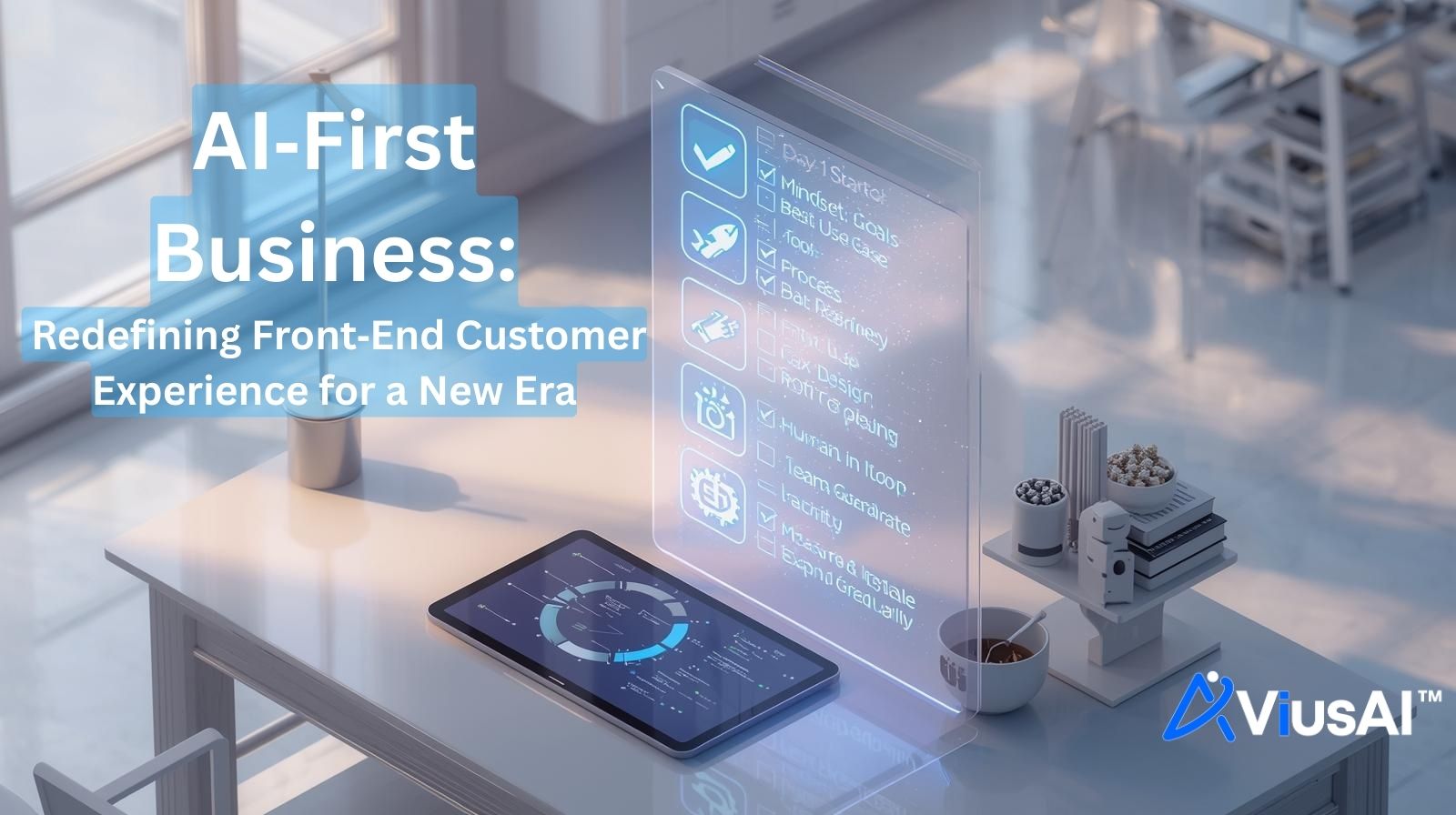
AI First Checklist

Quick “Day 1” Starter Plan
The AI-first checklist feels like a lot for some, so here’s the absolute minimum for your first 30 days:
- Pick one process: answering phone call FAQs, drafting emails, or first‑response to leads.
- Choose one AI tool that plugs into your current stack.
- Define one success metric (e.g., “cut response time in half”).
- Run a 30‑day pilot with human review on everything.
- Keep what works, adjust what doesn’t, and then move to the next process.
If you are inclined to go deeper, here’s a simple, practical AI‑first checklist you can use as a beginner. Treat it like a worksheet you revisit every quarter as you mature.
Listen to the podcast summary.
1. Mindset and Goals
- Define why you want AI (1–3 clear goals like “faster support replies” or “better lead quality” ).
- Commit to AI as a core capability, not just a gadget or single tool.
- Decide which is more important short‑term: saving time, growing revenue, or improving customer experience.
- Pick one customer‑facing journey to improve first (e.g., inbound calls, website leads, onboarding emails).
2. Process: Find the Best First Use Case
- List repetitive tasks your team does weekly (reporting, answering FAQs, scheduling, data entry).
- Mark tasks that are: digital, text/voice‑based, and rules‑driven (those are AI‑friendly).
- Estimate time spent on each (rough hours per week) to see the biggest time sink.
- Choose one narrow, high‑impact workflow to automate or augment first (e.g., “first‑response to web leads”).
3. Data Readiness Basics
- Identify where key data lives now (CRM, spreadsheets, inboxes, ticketing tools).
- Make sure you can export or access that data when needed.
- Clean obvious junk (duplicates, very old records, clearly wrong entries).
- Decide what customer data AI is allowed to see and what is off‑limits.
- Write a simple one‑pager on how you store and protect customer data.
4. Tool Selection (Start Simple)
- Favor tools that integrate with what you already use (CRM, helpdesk, phone system, calendar).
- Look for plain‑language interfaces so non‑technical staff can use them.
- Check that you can start with a small pilot (low tier, trial, or per‑seat pricing).
- Confirm there’s a clear way to measure impact (analytics, logs, or reporting).
- Avoid buying more than 1–2 new AI tools at once; master one, then expand.
5. Design the First Pilot
- Define the pilot scope in one sentence (e.g., “AI replies to after‑hours website chats”).
- Set 2–3 success metrics (e.g., response time, number of resolved queries, conversion rate).
- Decide what AI can do on its own and what must be handed to a human.
- Prepare example prompts, FAQs, or scripts your team already uses as training material.
- Set a short pilot window (e.g., 30–45 days) to test and learn.
6. Human in the Loop
- Assign a clear owner for the AI pilot (not “everyone’s job”).
- Decide when humans review AI output (always, random samples, or only escalations).
- Give your team a simple way to flag bad responses or failures.
- Create quick “playbooks” for what humans should do when AI gets stuck.
- Communicate internally: AI is a way to reallocate humans to higher value tasks, not to replace them.
7. Customer Experience Guardrails
- Decide if you will disclose that AI is being used (this builds trust).
- Set basic tone rules (friendly, concise, formal/informal, language do’s and don’ts).
- Define “never” behaviors (never give legal/medical advice, never guess on pricing, etc.).
- Ensure there is always an easy path to a human when needed.
- Review early interactions yourself to confirm they match your brand.
8. Security, Privacy, and Compliance
- Check vendor documentation on data use (storage, training, deletion).
- Turn off data‑for‑training features if required by your policies or industry.
- Limit who on your team can access admin controls and data exports.
- Update your privacy policy if needed to reflect AI‑driven processing.
- Keep a simple log of what AI systems you use and what data they touch.
9. Training Your Team
- Run a short intro session on what the AI tool does and doesn’t do.
- Show practical examples relevant to their daily work, not generic demos.
- Teach basic prompting habits (clear instructions, examples, and constraints).
- Encourage people to test on low‑risk tasks first to build confidence.
- Collect feedback after 2–4 weeks and update guidelines accordingly.
10. Measure, Learn, and Iterate
- Capture a “before” baseline (time spent, response speed, error rate, or conversion rate).
- Track metrics weekly during the pilot and compare against baseline.
- Keep a simple log of failures or strange behaviors and what you changed.
- Decide at the end of the pilot: stop, fix, or scale.
- If it works, document the playbook and move to the next use case.
11. Expand Gradually (From AI‑Curious to AI‑First)
Once the first use case is stable:
- Add a second use case that’s adjacent (e.g., from web chat → phone triage).
- Standardize how you evaluate and onboard any new AI tool.
- Create a lightweight “AI council” (even 2–3 people) to approve new experiments.
- Start connecting AI systems together (e.g., AI chat feeding your CRM automatically).
- Review your AI footprint quarterly to retire what isn’t working and double down on what is.
Avius AI: AI-First Customer Experience (CX) Solution
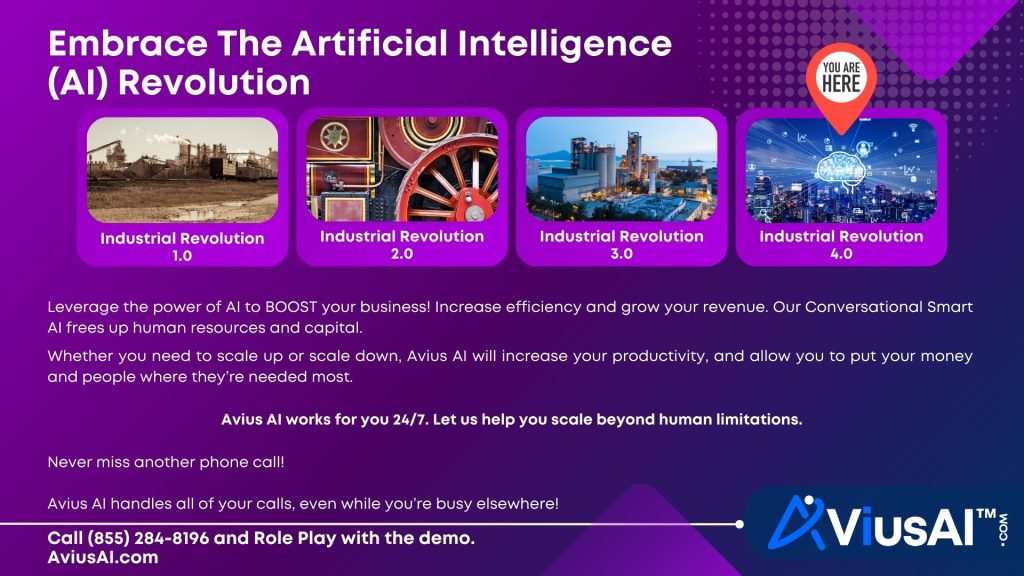
If AI‑first is the strategy, Avius AI is what it looks like in practice for small and mid‑size businesses that live and die on the quality of their front‑end customer interactions.
Most SMBs know they need better CX at the edge – on the phone, on the website, in web chat – but they rarely have the budget or headcount to staff a full contact center, let alone run a 24/7 operation. That’s the gap Avius AI is built to close. It provides conversational, agentic AI voice and web solutions that sit directly in front of your customers, answering calls, handling web chats, qualifying leads, booking jobs, and routing outcomes into your existing systems while your human team focuses on higher‑value work.
Instead of thinking about “a bot,” it’s better to picture Avius as an always‑on, AI‑powered receptionist, scheduler, and frontline agent that you can train to speak in your brand’s voice. Calls get answered, forms get completed, and customers get responses in real time – without you needing to hire, train, and retain multiple shifts of people to sit on the phones.[aviusai]
How Avius AI Embodies AI‑First CX
Avius AI is a practical example of the AI‑first principles many leaders talk about but struggle to implement. It connects the abstract ideas – agentic AI, intelligent automation, natural language CX – with clearly demonstrated ROI & other tangible outcomes that matter to owners and operators.
Here are a few ways it does that:
- Voice‑native and web‑native from day one. Avius is built around natural language voice and chat, not traditional IVR trees or rigid web flows. Customers can speak or type the way they actually talk, and the system understands intent, context, and follow‑up questions.[aviusai]
- Agentic behavior, not just scripted replies. Instead of simply answering FAQs, Avius AI can follow multi‑step workflows, stay on strategy toward a goal, and trigger downstream actions – like booking appointments, creating tickets, or updating CRMs – based on what the customer says.
- Context‑aware, empathetic responses. The platform is designed to detect cues in tone, wording, and context, and respond in a way that feels natural and human, helping build trust even though you’re talking to a machine.[aviusai]
- Always on, always consistent. Avius runs 24/7/365, offering the equivalent coverage of multiple receptionists (approximately 4.2 FTE at a minimum) or agents at a fraction of the cost, and without the variability that comes with staffing, training, and turnover.[aviusai]
In other words, Avius AI turns “AI‑first CX” from a slide in a strategy deck into something your customers experience every day when they call your number or open your website.
From Missed Calls to Captured Revenue
For many SMBs – contractors, medical offices, local services, professional firms – the biggest CX leak is simple: missed calls and slow responses. Every unanswered phone call or abandoned web chat is a potential job, booking, or relationship that disappears.
Avius AI addresses that problem directly:
- Every call answered. Incoming calls are picked up immediately by an AI voice agent that can greet the caller, understand their request in natural language, and decide what to do next – answer a question, collect details, schedule a visit, or escalate.[aviusai]
- Every inquiry handled. On your website, Avius‑powered chat engages visitors the moment they arrive, proactively offering help, capturing lead information, and guiding them to the right next step.[aviusai]
- High automation rates. For many businesses, Avius can fully resolve the majority of front‑line tasks – answering questions, booking jobs, updating basic information – without needing a human to step in, freeing your team to handle only the edge cases and high‑touch conversations.[aviusai]
Instead of trying to squeeze more productivity out of an already stretched team, you effectively multiply your front‑line capacity with an AI layer that never sleeps.
The Avius AI Ecosystem: Beyond a Single Bot
What makes Avius interesting from an AI‑first strategy perspective is that it’s not just a standalone chatbot or a one‑off voice solution. It is part of a broader ecosystem of modern business communications:
- AI voice and web chat platforms to handle customer interactions across phone and web.[youtube][aviusai]
- Telecom and connectivity services such as VoIP, internet access, and unified communications, ensuring the pipes behind those AI conversations are reliable and performant.[aviusai][youtube]
- Contact center and UCaaS tools for businesses that need more advanced routing, analytics, and multi‑channel orchestration.[aviusai]
- IoT and infrastructure capabilities for organizations that want to integrate AI‑driven communication with physical operations and devices.[youtube][aviusai]
This breadth matters because AI‑first CX doesn’t live in isolation. To deliver truly seamless experiences, your AI front door has to be connected to the rest of your technology stack – phones, CRM, calendars, contact center, connectivity, and more. Avius’ positioning as a full‑service modern business technology partner means you’re not stitching together a dozen vendors to get one consistent customer journey.[aviusai][youtube]
Experience and Credibility in a Noisy AI Market
In an AI market full of hype and “demo‑ware,” one of Avius AI’s differentiators is its roots in telecom and communications. The team behind Avius brings decades of experience across GPS, mobile telephony, VoIP, and enterprise connectivity, and has been involved in multiple generations of communications technology shifts.[youtube][aviusai]
That background shows up in a few practical ways:
- Reliability first. Voice and CX infrastructure can’t go down just because a model update is rolling out. Avius is engineered with the stability and uptime expectations of telecom, not just software experiments.[aviusai][youtube]
- Carrier‑grade thinking for small business. SMBs get access to solutions and pricing structures normally reserved for larger enterprises, including optimized connectivity, unified communications, and contact center capabilities wrapped around AI.[youtube][aviusai]
- Future‑proof design. The platform is built to evolve with rapidly changing AI capabilities, so you’re not locked into today’s state of the art. As models improve and regulations evolve, Avius can adapt the underlying intelligence while preserving the front‑end experience your customers already know.[aviusai]
In other words, Avius is not positioning itself as the flashiest AI tool on social media; it’s aiming to be the trusted, long‑term partner running your customer‑facing nervous system.
What an AI‑First Front End Looks Like With Avius
To make this more concrete, imagine how an AI‑first front end powered by Avius might manifest in a typical week for a services‑driven SMB:
- On Monday morning, while your staff are in a team meeting, the phones still get answered. The Avius AI voice agent greets callers, books three appointments, and answers eight routine questions that would have otherwise become voicemail or lost opportunities.
- All week, your website chat engages visitors in real time. Prospects ask, “Do you service my area?” or “Can I get a quote for a 3‑bedroom home?” The AI captures details, qualifies leads, and routes ready‑to‑book requests directly to your calendar or CRM.
- After hours and on weekends, the experience remains consistent. Callers and web visitors don’t get a dead line or a generic contact form; they get a responsive, conversational assistant that feels like part of your team, even though it’s AI.
- Meanwhile, your human staff see a cleaner queue: fewer redundant calls, more pre‑qualified customers, and context‑rich notes when they do need to jump in – because the AI has already collected the basics.
- Call transcripts delivered via email create an optimized way to hand off sensitive conversations that require higher value human talent.
This is the essence of AI‑first CX: your front door is intelligent, responsive, and deeply integrated with your operations, so your human team can spend more time doing the work that actually requires human judgment and empathy.
Next steps that you can take right now:
- Call 855-284-8196 and role play your business with the Avius AI demo. Get a feel for being AI first would work for your business, or
- Book an Appointment to discuss your challenges and specific needs.