10 Reasons Every Business Should Have AI-Powered Customer Communication
In the modern business landscape, customer communication is no longer just about answering phones or replying to emails – it’s about being available when and how your customers need you most. Whether through voice, text, or chat, companies that respond faster and more consistently win customer trust and long-term loyalty.
Artificial intelligence (AI) has become a reliable partner in that mission. AI-powered voice and messaging systems are transforming how businesses handle incoming calls, inquiries, and support requests. What once required a full call center and staffing across time zones can now be handled intelligently, efficiently, and with remarkable consistency.
If your goal is uninterrupted service, stronger customer retention, and better use of your team’s time, it’s worth exploring the simple, practical reasons why every business should integrate an AI-driven communication layer.
Let’s look at how redundancy, after-hours responsiveness, and an AI-first customer experience form the foundation of modern service.
Listen the quick 5 minute podcast.
1. Redundancy: The New Cornerstone of Reliability
Downtime is more than an inconvenience – it’s a reputational risk. One network hiccup or power outage can interrupt your phone systems or leave customers hanging at critical moments. AI communication systems add a critical layer of redundancy, ensuring that when something goes wrong, your business still answers the call.

How AI provides redundancy:
- Cloud-based infrastructure: AI systems stay active even if your local network or premise based PBX hardware goes down. Calls reroute through the cloud, keeping your communication channels open.
- Instant failover: When human operators or lines are unavailable, the AI voice agent automatically takes over live handling.
- Disaster readiness: Whether it’s maintenance downtime or a full outage, your customers still receive information, routing options, and reassurance.
Example:
A small logistics firm experiences an unexpected internet outage during peak hours. Instead of losing connection entirely, their AI voice system automatically greets callers, answers common questions about shipping delays, and logs requests for follow-up once connectivity is restored. Operations continue smoothly, and no leads are lost.
Redundancy used to require duplicate hardware and costly backup systems. Now, cloud-based AI makes resilience affordable and scalable – even for lean teams.
2. Beyond Office Hours: AI Never Sleeps
Your customers live in a 24/7 world. They read emails at midnight, browse services after work, and expect real-time help on their own schedule. That’s where AI after-hours coverage becomes one of the simplest, most impactful upgrades to your communication strategy.

What after-hours AI does:
- Provides live voice, chat or text responses around the clock.
- Captures leads and other data points.
- Sends summaries to human teams for follow-up.
- Executes workflows such a connects to existing CRMs or calendars for scheduling and more.
Instead of relying on voicemail or missed messages, an AI system keeps conversations going capturing intent the moment it’s highest.
Case in point:
A property management company installs an AI communication assistant to handle rental inquiries. Within a month, they found that 30% of new lease leads came between 6 PM and 10 PM – a window previously missed. Every inquiry was logged, qualified, and routed for next-day follow-up automatically.
This kind of nonstop responsiveness not only closes more business but also signals reliability and a quiet professionalism of a company that never leaves someone waiting.
3. AI-First Customer Experience: Smart, Empathetic, and Effortless
An “AI-first” experience doesn’t mean replacing humans. It means using intelligent systems to handle the routine so your people can focus on the exceptional. These tools are built to talk naturally, remember what was said moments ago, and even pick up on emotional tone.

Features of a truly AI-first experience:
- Natural language understanding (NLU): Allows people to talk or text normally – the system interprets intent without rigid phone menus.
- Context retention: When a customer asks a follow-up, AI systems keep the thread, avoiding repetitive questions.
- Tone awareness: Whether calm, upbeat, or formal, AI adapts its phrasing to match the brand’s voice.
- Human handoff: When a conversation requires live attention, AI provides immediate live person hand off instantly during your set working hours.
This approach creates smoother interactions and reduces frustration. Customers don’t repeat themselves, and employees start each engagement informed and ready.
An example: an automotive service center that uses an AI voice system to answer calls. The AI can confirm service hours, estimate common maintenance costs, and even schedule appointments via voice. For specific requests like part orders or warranty issues, it transfers callers directly to a specialist with notes already attached.
That blend of efficiency and empathy feels natural – almost invisible – and marks the future of modern customer engagement.
4. Operational Upgrade: Streamlining Workflows from Frontline to Back Office
AI-powered communication delivers more than just better customer interactions – it represents a fundamental operational upgrade that touches every layer of your business processes. By automating routine communication tasks, these systems free up bandwidth across departments, reduce errors, and create smoother internal workflows.
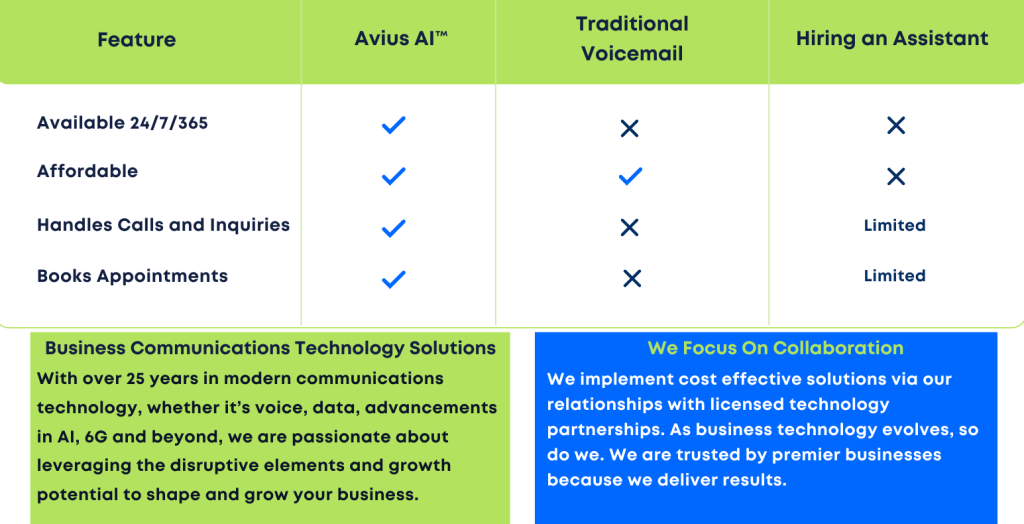
How AI upgrades operations:
- Frontline efficiency: Human staff spend less time on basic inquiries (hours, locations, FAQs) and more on high-value problem-solving and relationship building. Average call handling time drops significantly as AI resolves simple issues instantly.
- Back-office automation: Customer data flows directly into CRMs, inventory systems, and scheduling tools – eliminating manual note-taking and double-entry. Appointment confirmations, order updates, and lead scoring happen automatically.
- Cross-department alignment: Sales gets qualified leads with full conversation context; marketing receives real-time feedback on campaign performance; operations sees demand patterns for resource planning. Everyone works from the same live data stream.
- Scalability without complexity: As your business grows from 100 to 1,000 daily interactions, AI scales seamlessly – no additional headcount, training, or infrastructure required.
Real impact example:
A mid-sized healthcare provider implemented AI voice routing. Receptionists previously spent 60% of their day on appointment rescheduling and basic eligibility checks. Post-AI, that dropped to 15%, allowing staff to focus on patient intake, insurance verification, and care coordination. The result was a 25% increase in daily appointments served without hiring additional personnel.
This operational lift compounds over time. What starts as a communication tool evolves into a force multiplier for productivity, creating capacity for growth, innovation, and employee satisfaction. It’s the difference between reactive firefighting and proactive business optimization.
5. Cost Efficiency That Multiplies with Growth
Most businesses want to improve service without dramatically increasing overhead. AI makes that possible by reducing the cost of coverage while improving consistency.
Key cost benefits include:
- No overtime or staffing rotation needed for nights and weekends.
- Fewer missed calls, reducing revenue leakage.
- Automated data entry and routine FAQs handled instantly.
- Lower turnover for human agents, as they are allowed to focus on higher-value interactions.
Instead of hiring extra support staff for every new location or growth milestone, businesses can scale virtual coverage instantly. As customer volumes rise, AI systems manage additional interactions automatically – at a fraction of traditional labor cost.
Example:
A dental chain introduced an AI scheduling assistant across regional offices. The system fields appointment requests, handles cancellations, and syncs calendars. Result: fewer manual scheduling errors and an estimated 40% reduction in administrative workload.
When calculating ROI, many organizations realize that cost savings alone repay the investment – typically within months.
6. A Consistent Brand Voice Across Channels
Customers interact across multiple touchpoints – phone, email, chat, and social. Inconsistent tone or accuracy can create confusion or lower trust. AI systems give organizations a unified brand voice that carries across all interactions.
Benefits of message consistency:
- Customizable tone settings to align with brand personality.
- Consistent word choice and phrasing across voice and text channels.
- Script and prompt management that updates dynamically when policies change.
If you’ve ever called two different departments and received completely different answers, you understand the risk of inconsistency. AI systems eliminate that by ensuring messaging remains aligned – whether it’s 8 a.m. in Los Angeles or midnight in London.
7. Simple Implementation, No Code Required
For small to midsize businesses especially, complex AI deployments used to be intimidating. Modern communication AI platforms are now no-code or low-code, making setup accessible to nontechnical teams.
Easy implementation features:
- Prebuilt templates for tasks like lead capture, appointment scheduling, and routing.
- Drag-and-drop workflow builders for custom scenarios.
- Plug-and-play integration with most phones, CRMs, or help desks.
- Fast go-live – often within days.
This democratization of AI means you don’t need an IT specialist to create a sophisticated communication layer. Whether you’re a startup or an established company modernizing operations, these systems scale naturally with your goals.
8. Integration with Today’s Communication Ecosystem
The best AI communication tools don’t replace existing technology – they fit into it. Whether your systems run on cloud PBX, VoIP, or unified communications platforms, modern AI layers integrate natively.
Typical integrations include:
- Telephony systems: Cloud-based phone systems and SIP providers.
- CRM and workflow tools: Salesforce, HubSpot, or industry-specific platforms.
- Messaging applications: WhatsApp Business, SMS, web chat, and email.
- Collaboration software: Slack, Teams, and shared dashboards for lead alerts.
This interoperability means businesses can enhance what they already use, rather than rebuild from scratch. The AI layer simply extends the capability of every channel you already have.
9. The Human-AI Partnership Model
AI communication works best when viewed as a teammate, not a replacement. It handles high-volume, predictable interactions while freeing skilled employees to focus on complex or relationship-driven tasks.
Division of labor in hybrid models:
- AI: Answers common questions, collects information, handles routine tasks.
- Humans: Manage delicate issues, problem-solving, or customer retention.
- Combined: The transition between AI and human feels seamless – with full context sharing.
For industries with emotional gravity – such as healthcare, finance, or hospitality – this partnership allows people to apply empathy where it matters most while maintaining operational performance around the clock.
A good analogy is air travel: autopilot handles repetitive course corrections, freeing pilots to focus on navigation and safety. Communication AI works the same way – invisible when it should be, invaluable when you need it.
10. Future-Proofing Your Operations
Businesses adopting AI communication today aren’t just solving immediate challenges – they’re positioning for the next decade of customer expectations.
As speech recognition, emotional AI, and multilingual models mature, these tools will continually improve. By implementing now, you’re building the foundation for future channels, from smart speakers and in-car voice systems to augmented reality interfaces.
Future-ready features include:
- Dynamic learning from real interactions to refine accuracy.
- Easy updates as new platforms (voice, chat, AR) emerge.
- Compliance and data privacy features that evolve with regulation.
Early adopters don’t simply keep up; they lead. The earlier your business integrates intelligent communication, the smoother the evolution as customer habits change.
Bonus. Simplicity as a Strategic Advantage
Sometimes innovation hides behind simplicity. The technology powering AI voice and chat systems is advanced – but its value lies in how effortlessly it simplifies operations.
Small businesses use it to sound big. Enterprise teams use it to stay agile. Customers simply experience seamless support and quick answers. It’s the kind of quiet operational upgrade that pays dividends in satisfaction and efficiency.
When leaders talk about digital transformation, this is what they often mean: adopting technology that makes the business smoother, not more complicated.
The Simple Summary: Why It Matters Now
When you boil it down, the most powerful reasons to implement AI-driven customer communication aren’t technical or futuristic – they’re practical and immediate:
- Redundancy: Ensures you never miss a call or opportunity.
- After-hours coverage: Keeps your business open even when your team isn’t.
- AI-first experience: Creates faster, smarter, and friendlier interactions.
- Cost efficiency: Delivers scalable service without proportional expense.
- Consistency: Maintains a unified brand voice across all channels.
- Analytics: Turns customer conversations into actionable insights.
Businesses that embrace this approach create continuity, responsiveness, and trust – the new foundation of customer relationships.
Conclusion: Simplicity That Scales
Technology often feels complex, but the reasons businesses adopt it are simple: to be more reliable, more responsive, and more efficient.
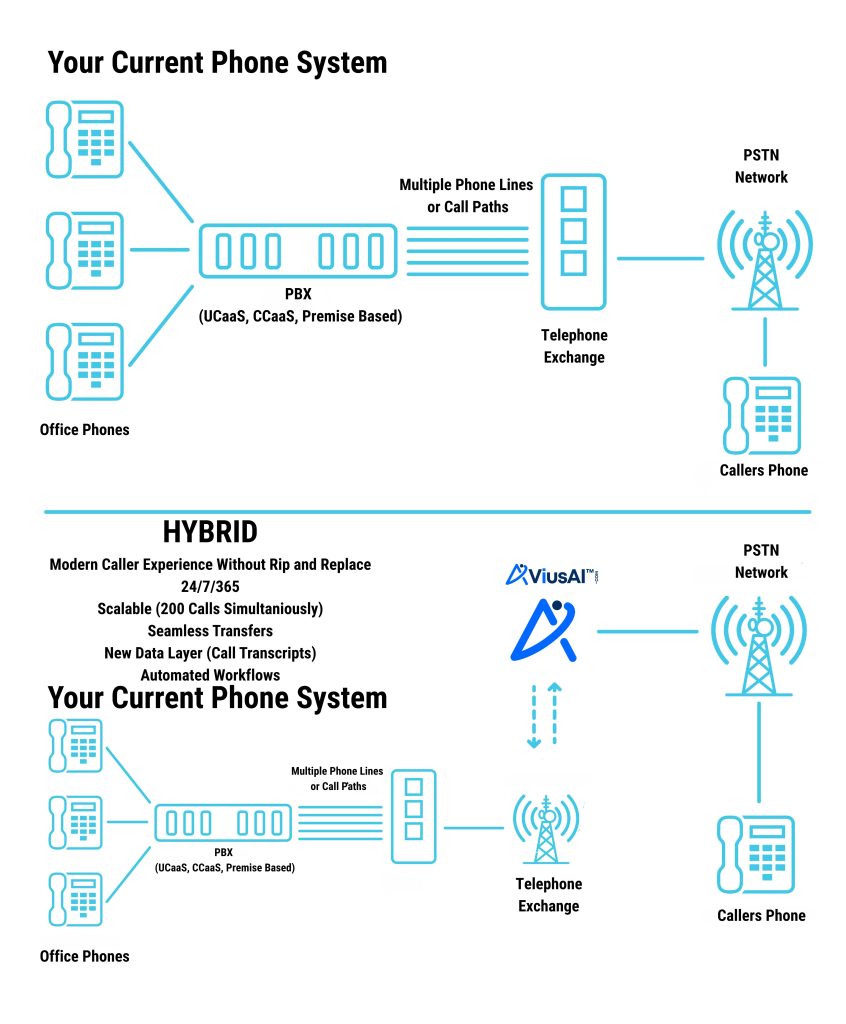
AI customer communication systems deliver these outcomes in the most direct way – by ensuring someone (or something smart) always answers, no matter the hour or situation. Avius AI takes this further as a lightweight 3rd party layer that sits on top of your existing telephony, UCaaS, CCaaS, or PBX systems – no rip-and-replace required. It integrates seamlessly with what you already have, enhancing performance without disrupting operations.
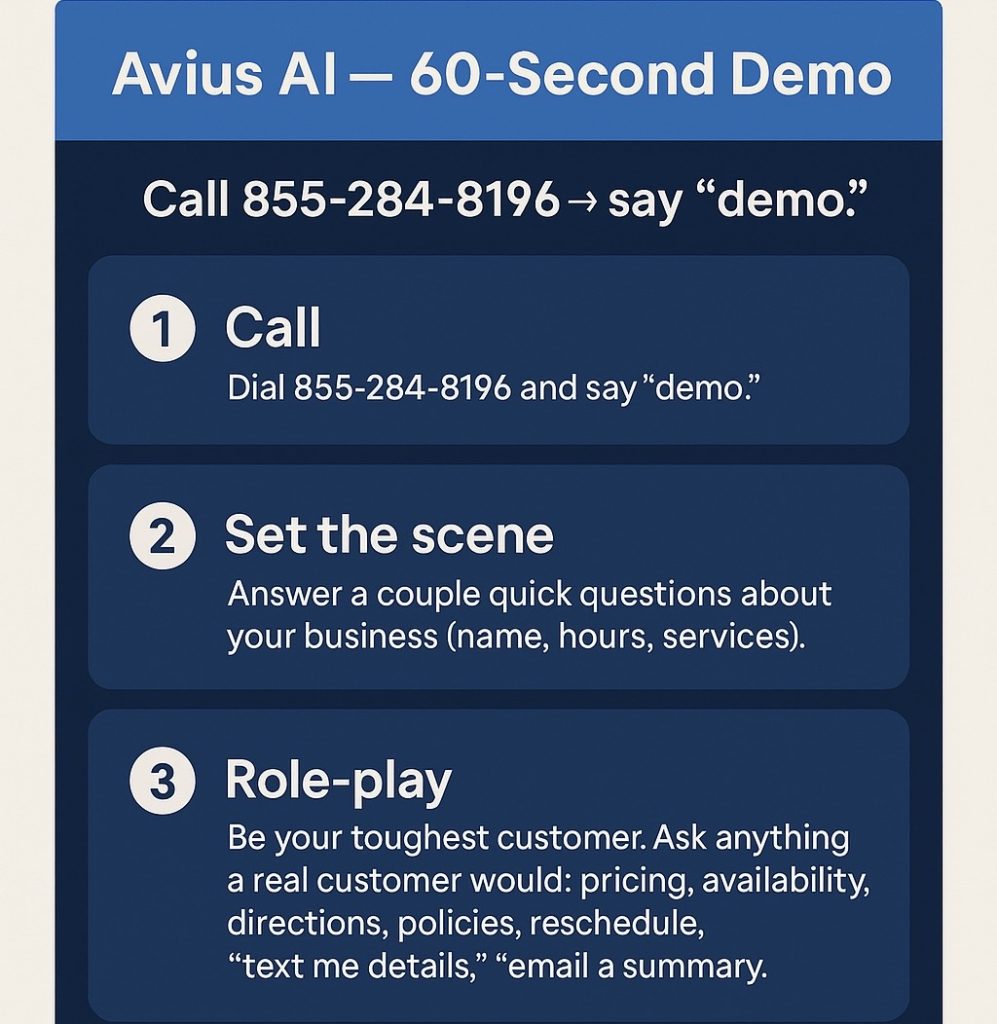
Ready to experience it? Call 855-284-8196 right now for a free demo. Role-play your actual business scenario. Tell Avius AI about your services, hours, and key offerings. You’ll see firsthand how it captures leads, answers questions, and hands off to your team with full context.
No sales pressure, just a live demonstration of 24/7 intelligence working for your business today. If you like what you experienced, you can book an appointment to learn more.
Whether you’re a growing company or an enterprise optimizing operations, an AI-driven communication layer is no longer a luxury. It’s a strategic necessity for staying competitive in a world that never logs off.